Thursday, September 26, 2013

God's Presence on Social Media

While enjoying the morning’s first cup of coffee, I find myself scrolling through the notifications on the various social media sites to catch up with family and friends.  It never fails; there is always at least one request for prayers.  Having been raised in a strict Roman Catholic household, I understand and respect the power of prayer and one’s faith.  
On an emotional and spiritual level, I have great respect for a majority of the requests then come across my newsfeeds.  Requesting prayers when a loved  one is battling a life threatening illness or, worse, is one thing. I can personally get behind and support those requests.
The requests I have a tough time supporting are the ones such as these which gone way beyond the spiritual realm:
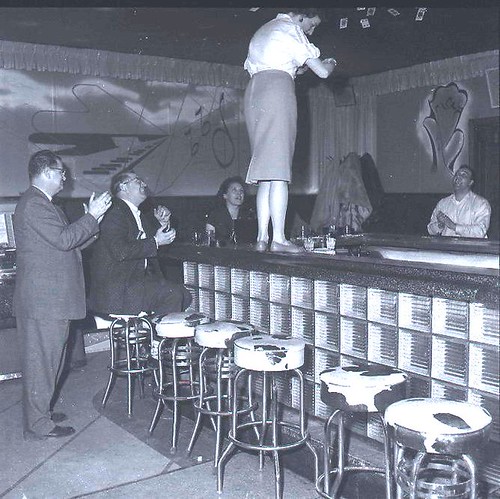
  • Please pray that my boyfriend doesn’t see this picture of me dancing on the bar last night after I told him I was too sick to go out.  
  • My car needs a new transmission, please pray that it doesn’t cost an arm and a leg.  
  • Matilda really has her heart set on attending Harvard, please pray that they look beyond her 1150 SAT score.  
  • Herman is interviewing for a promotion at work, please pray that he doesn’t screw it up like last time.

    Photo Credit: Agent-X Comics. www.agent-x.com.au
Are we to assume that God subscribes to Facebook, Google +, and Twitter?  Does he hold weekly hangouts?  Will he accept our friend requests?  If we don’t like and share the request, are we destined to go to hell?  Finally, if God has a Facebook timeline, how far back does it go and will we be able to finally answer the question of what he did on his day of rest?

Monday, September 23, 2013

The Day I Broke My Own Cardinal Rule

Well, now I have done it. My last post, Have You Hugged A Social Media Manager Today?; while an attempt to bring attention to those who give freely of their time and talents to provide nonprofit organizations and causes a social media presence, may have come across as what many would call a "cry for attention."  For that, I offer my sincere apologies.

One of my personal rules when it comes to social media has been to always try to put a positive spin on my posts. To try not to project negative personal feelings into what I write.  Feeling overwhelmed at the moment, I clearly broke that rule when I hit the publish button on Saturday.  In doing so, I not only failed myself; but you, as well.

Oh, sure, I could have easily removed the post and go on as if I never wrote it. All that would have accomplished, though, would have been a short lived sense of relief.  By leaving it up on the blog, it will serve as a reminder to me, and everyone else, that every article, post, tweet is not perfect.  There will be always be that one which will bring about either public or, in this case, personal backlash.  There will be those that appear self serving and more of a nuisance to your followers than anything else.

Social media management is no different than any other aspect of our lives.  We make mistakes. Rather than being viewed as the end of the world, mistakes should be viewed as learning experiences.  Reminders that we can always do better.

While I cannot guarantee that each and every post I make across all the social media platforms will be perfect, I will think twice before hitting the publish or submit button.  Should I slip up again, I ask that you please let me know.  If we are not made aware of our mistakes, we are unable to learn from them.

Saturday, September 21, 2013

Have you hugged a social media manager today?

"A social media manager is the individual in an organization trusted with monitoring, contributing to, filtering, measuring and otherwise guiding the social media presence of a brand, product, individual or corporation. Social media managers are often found in the marketing and public relations departments of large organizations." (source: WhatIs.com)

Many social media managers are also found in Internet cafes, co-working spaces, and, even at their kitchen tables.  These are the managers who take on this role as volunteers for organizations they belong to or for causes they hold near and dear to their hearts. Juggling the responsibilities of their personal lives, their real life jobs and the marketing tasks they agreed to do for little or no monetary compensation is no easy feat.  

While they may enjoy what they do for these organizations and causes; a hug, pat on the back or a simple acknowledgment of a job well done goes a long way. Don't make the assumption that because they enjoy being immersed in social media, they are willing to take on every task thrown at them.  As with any volunteer, there is the possibility of burnout; especially when they are not acknowledged for the work they do.

So the next time your organization meets, acknowledge those who volunteer what should be their "me time" to promoting your events and good news.  Giving them a hug, a pat on the back or, even, a cup of coffee can go a long way.


Friday, September 13, 2013

Social Media's Effect on Breaking News

In the not so distant past, families would gather in anticipation of hearing the familiar and soothing voices of David Brinkley, Walter Cronkite or Dan Rather. (Okay, so I grew up in a CBS household – more from the angle of the roof antenna than from choice.  For those of you with better reception or just simply a little bit younger than I; imagine Peter Jennings and Tom Brokaw.)  We knew if they had bad news to tell us, everything would be okay just because of who they were and how they presented it.  When the news was good, you found yourself sharing in their excitement from your living room.
Fast forward to the infancy of cable and the 24-hour cable news networks. How long did it take for us to realize that it was not in fact 24 hours of breaking news?  Was it after the third or fifth time the same news story was replayed on our television screens?
Social media has changed how we process news and information.  At any point in a 24 hour day, we log in and quench our thirst for news moments after it occurs or even as it is happening through live streaming.  With the influx of blogs, twitter and social media sites, we take on the role of “news distributors”.  (I use the term “news distributor” in deference to the professional journalist who is compensated to report the facts in an unbiased manner.)
We receive updates on our news feeds and share them with our network of friends. We post our commentaries and reactions before the facts have been fully fleshed out by seasoned journalists.  
Rallies are organized; independent investigative task forces are called for; and online petitions are started; all before the morning paper’s ink has had a chance to dry. The online distraction can become so intense that the full facts, when finally released, never seem to satisfy us. Social media has taken on the role of the fatherly news anchor types of the past.
We more driven by our initial reactions than ever before.  Gone are the days where facts and figures are left to the journalists to decipher and analyze for us.  We already know the lead story before the 11 o'clock news or the delivery of the the morning newspaper.  
As broadcast and print media continue to evolve in the Internet age, consumers of the news need to be flexible in how they react.  The days of the final edition are over. There will always be an update to an update.  Our indignation and disgust on Monday may be tempered by additional information in an update released on Wednesday.  

Saturday, September 7, 2013

When Blogging Morphs Into A Full Blown Infomercial

A blog (a contraction of the words web log)[1] is a discussion or informational site published on the World Wide Web and consisting of discrete entries ("posts") typically displayed in reverse chronological order (the most recent post appears first). (source: Wikipedia) 

Over the course of a day, I read blog posts written by various authors; many of whom have become giants in their respective industries. While not, by any means, denigrating their thoughts and ideas, I do have a problem with those authors who have turned their informative posts into infomercials.

Some authors have become so brazen as to have an embedded link to their website in every other sentence or paragraph.  Now, there is definitely nothing wrong with self promotion; however, the hard sell approach can become grating on the nerves; and to be perfectly honest, downright annoying.

Blogging is essentially online marketing of a brand, community or yourself.  It is, for all intensive purposes, no different than marketing offline.  You need to instill confidence in your followers (and potential clients) and open the lines of communication.  Past years of sales, marketing and customer relations taught me one thing, the soft sell approach has an overall greater effect than the hard sell.  

While your readers may have strong positive or negative opinions concerning your post, the overabundance of links to your sales site can be viewed as an obstacle to a productive dialogue.  More often than not, I stop myself from commenting or sharing someone's post for fear of appearing to be their salesperson; all because of the hard sell approach their article took.  

If you truly believe and stand behind your product, brand or idea and articulate this passion in a way that interests the reader, more often than not they will click through on the ONE link to your website at the end of the post or in the about the author box.  Taking on a more informative and conversational approach rather than a "used car salesman" approach opens your work up to more sharing and discussion.  Sharing and discussion is what it should be all about. If done correctly, making a sale is simply an added benefit.


Thursday, September 5, 2013

Social Media's Role In Local Politics

The use of social media in the national and statewide political process has proven to be an important tool in both the election process and continued constituent communication. There have been more than enough articles published regarding the increased use of social media by our national elected officials and their surrogates.  They do a great job getting their messages out and engaging with their constituents. Maybe too great of a job. Their social media success brings to light how social media understanding is lacking on the local level. As we become more social media savvy; local candidates and elected officials do not seem to have fully embraced the true essence of social networking.  
The time honored traditions of press conferences, news releases, meet and greets and knocking on doors will always have their place in distributing the message. However, they should not be considered the only options.
Social media is more than just setting up a Facebook page or a Twitter account in order to post status updates and press releases.  Theoretically, that is what a website has been traditionally used for; and even that has been evolving over the last few years.  Social media should be looked at as a means to initiate a two-way dialogue with followers.  To engage them on the issues.  That is not to say that our news feeds are void of any updates on the local level. It is sporadic at best.  In terms of engagement with constituency and followers; however, it is at times nonexistent.   
We have social media contacts from many regions of the country, if not the world. A vast majority of us regularly share our views on local, national and global political topics with solely local connections. At one point, I was involved in four separate discussions on the hot button topic of the day. Each of those discussions involved four separate groups of people.  Though hard to keep track of the progress of each discussion, it was an exhilarating and intellectually stimulating experience. Unless our local politicians were mutual connections with those involved in the discussion, they remained clueless regarding the sentiments expressed.  In a perfect virtual world, it would have been nice to have these lively and insightful conversations on one central location where the voices of the participants would have been heard and responded by our local politicians and/or their surrogates. That is the true essence of social media.  
It is not as if we do not try to start conversations with them.  There are comments made on their Facebook and Twitter posts.  Very rarely are there responses or even a "Like".  Social media engagement needs to be viewed with the same importance as one would view constituent engagement at a fundraising event or while knocking on doors. First rule of thumb for every politician is to get to know your political base and constituency by engaging in a dialogue with them. Constituents want reassurance, even online, that their voices and opinions are being heard by those that represent them or hope to represent them.


Monday, September 2, 2013

Don't Be So Quick to Blame the Internet

This post is clearly a personal observation and will offer no sound advice or tips regarding social media. If that is the only reason you clicked on the link, I will not be offended in the least if you stop reading this now.

Now for those of you who stayed; for whatever reason, I have a bone to pick. Why are we so quick to blame the Internet for every half truth, offensive post and those hordes of cats that we are so quick to share across every social media platform?  Have we, as a society, forgotten how to be freethinkers and not ones to be so gullible that we believe each and every post on Facebook, Twitter, Google Plus, etc?

Fact: The Internet is merely the mechanism used to transmit ideas, images and the like to your computers, laptops, tablets and smartphones. It is not a person. It does not have rational thought, a conscious or even a sense of humor.

Fact:  The ideas and images we encounter through Internet transmission are those conceived by actual human beings.  Humans have been known to err in judgement and, at times, lack common decency. Does that make us the worst possible living creature on the planet? No, it is what makes us human. (By the way, the worst possible living creature in my book would be that spider hiding out in corner of the ceiling waiting to attack; but I digress.)

Fact: Social media marketers know the tricks of the trade. They know what words and images to use that will get a post shared and commented on the most. They know which audience they are targeting and, conversely, they know how to get a rise out of the opposing audience. It is their job and many of them do it quite well.  

Fact: All of us who use the Internet for one reason or the other are social media marketers in our own right. We know which of our posts will generate the most shares and comments. At times, we refrain from posting something out of fear of being ridiculed.  (That reminds me, maybe I should remove the line about the spider before I find pictures of spiders posted to my timeline.)

Fact: Many of us will share something because we agree with its message without first researching its validity. Granted, who really has time for a lot of research; especially when most of our interaction on the Internet is done via smartphone. Bandwidth is pricey; and, seriously, who has time to wait a minute for a website to load when there is so many more interesting things to scroll through on our news feeds?

If you made it this far, thank you.  I do have a request for you, though. The next time someone starts arguing with you and claims that something must be true because they saw it on the Internet, Facebook, Twitter, etc.; please knock them down, take a picture and post it on, where else, the Internet. (Just kidding. Or am I?  You did read this on the Internet.)